Why Edible Potency Varies from Person to Person
The Science of THC Conversion in the Liver
Two people can eat the same brownie and have completely different experiences. One might feel a gentle calm for a few hours. The other might be incapacitated on the couch for an entire afternoon. This disparity is not random chance. It comes down to the unique biochemistry of your liver and the enzymatic processes happening inside it.
When you swallow an edible, the THC travels to your liver. Here, an enzyme called CYP2C9 converts it into a more potent metabolite called 11-hydroxy-THC. This compound crosses the blood brain barrier much more easily than inhaled THC, which leads to a stronger, more sedative high. The speed and efficiency of this conversion depend on your genetics, your body weight, and even your liver health. This biological variability explains why a friend can eat three gummies without issue while you feel floored by a single bite. Your own unique enzyme activity alters the final effect.
You must respect this variable when calculating your initial dose. A standard recommendation of 10mg is a starting point, not a universal truth. To navigate this safely, you need to account for your own metabolic profile. The best approach relies on a bit of math and a strong caution with new edibles. Considering your personal conversion rate is vital for an accurate result.
Keep these factors in mind when you eat:
– Your unique enzyme efficiency
– Recent food intake, which can slow absorption
– Your current tolerance level
These variables shift the outcome every time. This is why most experts advise starting with a very small amount, around 2.5mg or 5mg, before trying a stronger product. A reliable edibles dosage calculator forces you to input your weight and metabolism, giving you a safer start. It cannot measure your liver, but it certainly helps you avoid an unexpectedly intense experience.
Metabolism, Body Chemistry, and Timing
Your metabolic rate, not the package promise, dictates how strongly an edible affects you. A rapid metabolism burns through THC quickly, while a slower one sustains its presence. Body fat stores THC, releasing it unpredictably. From my own experience, a dose that calms a friend can paralyse me.
Timing shifts the outcome. Food in your stomach slows absorption, sometimes by hours. That lag fools many users into doubling up, a mistake that turns a mild evening into a wasted day.
- Fatty meals delay onset but extend duration.
- An empty stomach peaks faster, then fades sooner.
- Evening doses feel heavier than morning ones.
These variables demand a personalised approach. An edibles dosage calculator accounts for your metabolism and recent meals, offering a safer starting point than a generic recommendation.
Why the Same Dose Hits Differently
A single brownie can be a pacifier for one person and a sledgehammer for another. The difference is not a flaw in the recipe, but a divergence in your biology. Some users possess an enzyme profile that converts delta-9-THC into 11-hydroxy-THC with alarming efficiency. This metabolite crosses the blood-brain barrier faster and binds more aggressively. A Row vs. Doe extract might measure the same milligrams, but the subjective experience will differ wildly.
Consider two scenarios from the same batch. A 200-pound athlete with a high metabolism feels a subtle body high. A 140-pound friend feels a pounding rush that borders on hallucinogenic. Their body fat percentage, liver enzyme activity, and even their gut microbiome alter the final outcome. Weight does little to predict the response.
The factors are specific and measurable.
– The chemical structure of the specific cannabinoid profile.
– The presence of terpenes that modify absorption.
– The individual’s level of metabolic tolerance.
– The genetic variance in liver enzyme activity.
– The current state of your endocannabinoid system.
Even a microdose can trigger a massive response in a sensitive user. This unpredictability is why a reliable edibles dosage calculator is an essential tool. It removes the guesswork from a process that is otherwise dangerously variable. The calculator can factor in past reactions and adjust for unique sensitivities, offering a safer path to a controlled experience. A rule of thumb does not account for the silent variables that decide your night.
The Risks of Guessing Instead of Measuring
Estimating a dose by eye is a gamble with your evening. A single miscalculation about herb strength or butter absorption can turn a relaxed night into a disorienting ordeal. The stakes are real. An unexpected 100-milligram serving can trigger panic and a pounding heart that no one signs up for.
The risks of skipping an edibles dosage calculator are simple:
- You cannot see the milligrams sitting inside a brownie.
- Your tolerance is never a fixed number, it shifts with frequency and recency of use.
- Your last experience holds no authority over your next one.
Without measurement, the evening is a coin toss. A proper edibles dosage calculator removes that randomness, grounding your serving in past reactions and known potency. It is not about cautiousness for its own sake. It is about respecting the delayed onset before the second serving quietly sneaks up on you.
Essential Math for Precise THC Dosing
Converting Total Milligrams into Per-Serving Values
Precision in edibles starts with a single calculation that transforms your entire batch into predictable portions. Take the total milligrams of THC in your infusion, then divide that number by how many servings you plan to cut. This is the edibles dosage calculator at its core, yet most home bakers skip the arithmetic and rely on guesswork. A 500 mg batch split into ten pieces gives you 50 mg per serving, but split into twenty pieces drops that to 25 mg. That difference matters enormously when you are cooking for friends with varying tolerance levels.
Here is the essential math broken into manageable steps for your next bake:
- Determine the total THC content in the entire batch, usually from the starting flower or concentrate.
- Measure the volume of your infused base, such as butter or oil, and note the number of servings after cutting.
- Divide the total milligrams by the serving count to get the per-piece dose.
This calculation assumes thorough mixing, meaning every bite carries the same load. Uneven stirring forces some diners to face a stronger dose than others, which defeats the purpose of an edibles dosage calculator. Weigh your finished product in grams first, then apply the same division. A 200 g tray with 40 g per square yields exactly five squares, so dividing the total milligrams by five reveals the true per serving value. That clarity transforms dosing from a shot in the dark into a deliberate choice you make with each cut.
Factoring in Tolerance and Desired Effects
In Johannesburg, a single 25 mg square can send one guest into quiet reflection while another barely notices the dose. Tolerance is not a footnote in the arithmetic; it is the coefficient that determines whether your edibles dosage calculator produces a pleasant evening or an anxious one. Daily medicators often require double the serving size a newcomer needs, so regular consumption patterns shift the equation.
Here is the adjustment for tolerance:
- Assign a multiplier of 1.0 for occasional users, 1.5 for weekly consumers, and 2.0 for daily medicators.
- Apply that multiplier to the base per serving dose before you cut the batch.
Desired effects also change the target. A 5 mg serving sharpens focus while 30 mg invites full immersion. The edibles dosage calculator supplies the raw numbers. You supply the intention.
Weight-Based vs. Effect-Based Dosing
Everyone wants a number, but the edibles dosage calculator only gets you halfway. Weight-based dosing treats your body mass as the controlling variable. It gives a starting point, not a rule. Effect-based dosing flips the question: what do you actually want to feel? A light focus, a relaxed body, a heavy sleep? Each target changes the milligram count. In my experience, the most useful approach uses both. Look at the weight-based figure, then adjust for the effect you need.
Some general ranges for a 70 kg adult:
– 1 to 2 mg per 10 kg for subtle focus
– 3 to 4 mg per 10 kg for moderate relaxation
– 5 mg per 10 kg for deep sedation
The edibles dosage calculator handles the conversion. Just remember that weight is a starting lever, not the full equation. Effect is where the personal arithmetic begins.
How to Calculate a Custom Batch of Homemade Edibles
The leap from eating someone else’s brownie to making your own is a leap from guesswork to mathematics. Precision in homemade edibles starts with a single figure: the total milligrams of THC in your infusion. Whether you start with flower or concentrate, you must know the potency of the base ingredient. Without that number, the rest is architecture on sand.
Consider a batch of coconut oil made with 10 grams of flower testing at 15% THC. The calculation is straightforward: 10,000 milligrams of flower multiplied by 0.15 gives you 1,500 milligrams of total available THC. Assuming a near complete decarboxylation and infusion efficiency of around 80%, you are left with roughly 1,200 milligrams in the oil. This is the raw material of your recipe.
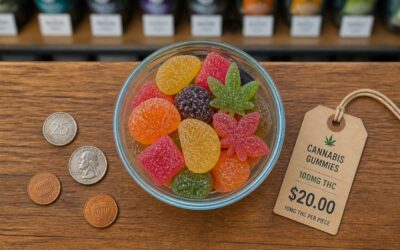
Now, divide that number by the portions you intend to create. If that oil goes into 24 gummies, each piece contains approximately 50 milligrams. This is where an edibles dosage calculator earns its keep. It handles the unit conversions and batch size adjustments, removing the arithmetic friction between you and your target dose. The calculator does not decide your experience; it simply tells you what is in the spoon.
The real skill lies in matching that number to your intention. A 50 milligram gummy is not a single experience. For one person, it is a night of heavy sedation. For another, it is a mild inconvenience. The edibles dosage calculator gives you the capacity to engineer a batch with multiple strengths, creating a spectrum from a 5 milligram focus aid to a 50 milligram sleep aid. The math is the scaffolding, and your personal tolerance is the occupant.
A Step-by-Step Approach to Finding Your Perfect Dose
Starting Low: The 5 mg Rule and Why It Works
The most difficult measurement in edibles isn’t milligrams. It’s patience. Most people want the full experience immediately, and that impulse leads to overconsumption every time. The 5 mg rule exists because it gives your body a manageable starting point, not because it’s the final destination.
Starting with 5 mg allows you to observe your personal reaction without overwhelming your system. You get a reference point that makes future calculations meaningful. That’s your baseline for calibration. Once you know how 5 mg feels, your edibles dosage calculator becomes a tool for precision instead of guesswork. You might feel nothing, which is fine. You might feel a subtle shift, which tells you where the threshold begins. Either outcome provides data.
Because the 5 mg rule removes the variables of panic and discomfort, it makes the next dose an educated decision. You know exactly how far you traveled and how long the journey took. That knowledge transforms every subsequent batch into a controlled experiment. It turns eating an edible into a deliberate practice rather than a gamble.
Keeping a Dosing Journal to Track Effects
Nobody finds their ideal dose on the first attempt. The variation across human endocannabinoid systems is too wide for a universal formula. Your first few experiences provide a reference, not a preset target. A stepwise approach works best: begin at your 5 mg baseline, then increase by 2.5 mg on subsequent occasions until you notice a clear shift in perception. But memory alone cannot track these subtle changes. That is where a dosing journal enters.
.
Before each edible, record the exact milligram amount, the time, your stomach state, and your emotional state. After consumption, log every sensation as it occurs. A simple rating scale from 1 to 10 can capture intensity across hours. Your journal should include:
- dose in milligrams
- time of onset, peak, and duration
- mood and setting
- stomach contents
- subjective effect rating
Each entry sharpens your edibles dosage calculator, converting crude estimates into data. Without these observations, dosing relies on guesswork; with them, each batch becomes a deliberate measurement.
Doubling Up Safely: When and How to Increase
The difference between a pleasant high and a paralyzing one often rests on a single milligram. I have seen the math fail when people skip steps. A precise calculator gives you a target, but your body controls the timeline. Once your journal records two consistent sessions at a given level, you can add 2.5 mg. Doubling up entirely, say from 10 to 20 mg, demands three stable sessions at the lower dose. This protects you while liver enzymes adjust.
Your personal peak curve decides the waiting period. Some arrive at hour three, others at hour five. The variety explains why doubling without data ends in regret. Keep the same batch, match your meal composition, and confirm the prior dose’s peak passed before you proceed. Each condition makes the edibles dosage calculator more precise, and your next dose becomes a calculation rather than a gamble.
Using Simple Formulas to Scale Up or Down
A formula removes the guesswork. Your baseline dose becomes the fixed reference for every adjustment. To scale up or down, use a simple ratio: divide your target effect by the baseline, then multiply that fraction by the original milligrams.
- Record your baseline dose from two consistent sessions.
- Decide the desired intensity shift, expressed as a fraction.
- Multiply the baseline by that fraction.
The arithmetic turns a 20 mg batch into a precise instrument. Variables like meal fat content, sleep quality, and cultivar terpenes belong in the calculation. I prefer this ratio method because it stays honest about tolerance. Start with the edibles dosage calculator to set the baseline, then apply the ratio. A clear formula lets you adjust without losing control.
Recognizing the Peak and Duration Curve
Finding your perfect dose depends on reading the timeline more than on arithmetic. The peak and duration curve contains information that numbers alone miss. For most people, the first noticeable shift arrives around 45 minutes after eating, but the true peak lands between 90 and 120 minutes. That lag causes trouble. An edibles dosage calculator gives you the total milligrams, yet the curve decides how those milligrams feel.
The step-by-step approach requires patience through the full arc. An edibles dosage calculator only sets the starting point. I have watched people toss back another bite at the 60 minute mark because the effect felt faint. That is a mistake. The liver is still converting THC. At 90 minutes, the wave becomes clear. The descent takes another two to three hours, sometimes longer. Judging the dose too early leads to a misreading of potency, and that misreading is how people end up overmedicated by dinner.
Emergency Overdose Protocol: What to Do If You Take Too Much
Finding your perfect dose is a slow waltz, not a sprint. The first rule is to actually finish the first serving before judging anything. An edibles dosage calculator tells you the milligrams, but your body tells you the truth. If anxiety spikes or the room tilts, you have overdone it.
Emergency overdose protocol is less about heroics and more about waiting it out. Do this instead:
- Lie down and breathe slowly.
- Drink water, not more edibles.
- Keep a piece of CBD chocolate nearby.
Most cases pass within a few hours. Severe symptoms like uncontrolled vomiting or confusion warrant urgent care. Your edibles dosage calculator offers a safe starting point, but it cannot predict every reaction. Respect the curve, and you will survive your own cooking.
Smart Tools and Techniques for Consistent Dosing
Manual Spreadsheets vs. Automated Calculators
Manual spreadsheets offer complete control, but they demand constant vigilance. Every formula sits in your hands, and a single misplaced decimal wrecks an entire batch. Automated tools, by contrast, apply the same edibles dosage calculator logic every time. They catch outliers and store past batches, which gives you a reliable reference without extra bookkeeping.
Here are the practical differences:
- Spreadsheets require manual error checking.
- Calculators validate inputs automatically.
- Batch history is searchable in automated systems.
Most people switching from paper to software notice fewer mistakes immediately. The tradeoff is transparency. If you need to see every calculation step, a spreadsheet wins. If speed and consistency matter more, an automated tool pays for itself. Either way, your own observations remain the final judge.
Measuring Tinctures and Oils for Precise Drops
Measuring tinctures and oils requires a different discipline than weighing butter or flour. A dropper bottle can deliver inconsistent volumes depending on viscosity, temperature, and the angle of the bottle. A cold tincture produces larger, slower drops, while a warm one runs thin and fast. If you rely on counting drops alone, your servings will drift without you noticing.
One reliable method is to calibrate your specific dropper against a known volume. Count how many drops fill a teaspoon, then divide accordingly. That gives you a baseline the edibles dosage calculator can use to convert drops into milligrams per serving.
- Store tinctures at a consistent room temperature before measuring.
- Use the same dropper for every batch, since bottle openings vary.
- Count drops slowly and vertically for repeatable results.
Once your drop size is locked down, the edibles dosage calculator transforms those measurements into actionable serving sizes, removing the guesswork from high-potency oils.
The Role of Kitchen Scales and Syringes
Your kitchen scale is more accurate than your eyeballs, and that is not a compliment to either. Weighing your infused butter or coconut oil removes the variability of measuring cups, where a packed tablespoon can hide an extra gram of fat. Syringes take over for liquids, especially when your recipe calls for small volumes like 2 ml of tincture. A 1 ml oral syringe gives you control that a dropper bottle cannot match.
Here is the practical sequence:
- Tare your container on the scale.
- Add your infused fat and record the weight.
- Use a syringe to measure any liquid cannabinoid extracts.
- Enter those numbers into an edibles dosage calculator.
This combination turns precision into a habit. The scale and syringe do the precise work, so the calculator only needs to handle simple division.
Leveraging Lab-Tested Products for Accurate Numbers
Lab tested products remove the guesswork that homemade infusions often carry. When your oil or tincture arrives with a certificate of analysis, you know exactly how many milligrams of cannabinoids sit in each gram. That number feeds directly into an edibles dosage calculator. Without it, you are dividing by an educated guess.
Smart tools keep variables in check. A digital thermometer, a magnetic stirrer, and a programmable oven steady the process. They maintain temperature, which protects potency. Pair them with lab results and your batch becomes reproducible.
Here is what matters most:
- Confirm the batch number on your product label matches the certificate of analysis.
- Use the total THC and CBD values, not just the sum of the label’s front panel.
- Recheck the calculator’s serving size field against your intended cut lines.
Each step narrows the gap between recipe and reality.
How to Estimate Doses for Baked Goods and Chocolates
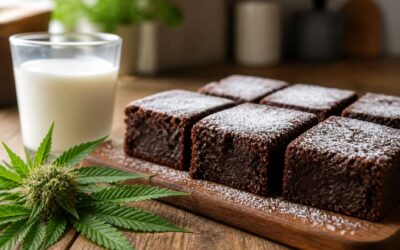
Baked goods hide their dose in every crumb, and chocolate masks it in every square. Without a calibrated digital scale and a temperature-controlled melting pot, your edibles dosage calculator can only manage the math, not the mixture. For brownies, distribute the infused fat evenly into the batter while it is still warm, then whisk for a full two minutes. That movement alone prevents the classic “one corner hits harder” problem.
For chocolates, the sequence matters. Melt, cool, and reheat to the right temper, then pour while stirring continuously. Use a silicone mold with uniform cavities, each one sized against your target dose.
- Weigh the total finished batch.
- Divide by the number of pieces.
- Enter that weight into your edibles dosage calculator to confirm per-serving values.
A probe thermometer keeps you inside the safe range, and a gentle stirrer prevents separation. Estimate doses by the weight of each finished piece, not by visual guesswork.
Common Pitfalls When Using Dosing Apps and Charts
Dosing apps and charts love to pretend your brownie batter is a sterile lab sample. They aren’t wrong until they are. The smartest technique is to treat any edibles dosage calculator as a suggestion engine, not a truth teller. I always cross-check app outputs against my own scale readings. Most apps assume perfect THC distribution, which your whisking method might have ruined.
The common pitfalls are predictable. Apps rely on average potency values that ignore your actual flower or butter strength. They also forget that serving size means weight, not a vague square. A chart might say 10 mg per piece, but your piece weighs 85 grams while the app assumed 50. That difference changes everything.
- Confirm the app’s batch weight against your real finished weight.
- Use a syringe for oils and a scale for solids, never volume alone.
- Record cook time and fat content, since these shift potency.
An edibles dosage calculator only earns its name if you feed it honest numbers. When a chart fights your scale, trust the scale. Apps are handy for quick estimates, but they can’t taste your butter or feel its thickness.


0 Comments